PPP Model is the Future of Medical Education, Says NMC Chairman
Building Better Infrastructure Through Collaboration
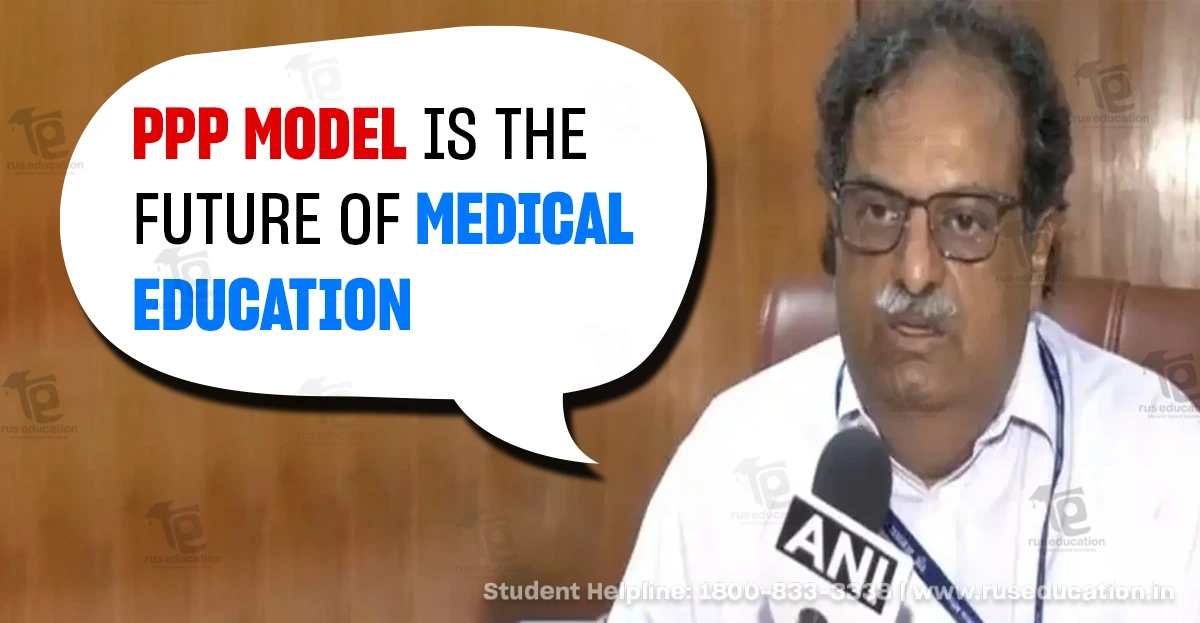
Dr. Sheth explains that the PPP framework can transform district hospitals into complete medical colleges that deliver superior patient treatment alongside advanced medical training. He pointed to states like Gujarat, where the Brownfield Medical College Policy is active, allowing private entities to elevate government hospitals into teaching institutions—a strategy that serves both the healthcare sector and future medical students.
He noted that these frameworks focus on recognition rather than financial gain, typically improving medical services in remote areas. Furthermore, Dr. Sheth suggested channeling Corporate Social Responsibility funds into medical infrastructure development instead of letting them sit unused or misdirected.
Quality Over Quantity in Medical Training
Although India has experienced fast expansion in its quantity of medical schools and MBBS positions, Dr. Sheth cautioned that educational standards must not suffer. He highlighted that multiple colleges throughout various states continue to experience shortages in proper clinical practice, modern facilities, and teaching staff.
To maintain high educational criteria, he highlighted the necessity of:
- Competency-based and patient-focused learning.
- Teacher guidance and ongoing medical instruction.
- Incorporating digital education and skill-focused evaluations.
- Close cooperation between state and private bodies for mutual education and investigation.
He additionally mentioned that the National Exit Test will play a crucial role in maintaining standardized assessments for medical graduates and upholding uniform quality benchmarks across every institution.
Addressing Concerns Around PPP in Education
While the PPP strategy receives praise for its expansion capacity and creativity, certain specialists worry it might lead to the commercialization of medical training. Detractors argue that increased private sector participation could push tuition costs higher, making it harder for economically disadvantaged students to pursue medicine.
Nevertheless, Dr. Sheth gave assurances that rigorous monitoring by the NMC and state administrations will stop any exploitation of the framework. He underscored that openness, fair availability, and reasonable costs will stay central to any PPP undertaking in medical training.
A Balanced Approach to India’s Healthcare Goals
The remarks made by the NMC Chairman align with the central administration's broader vision to improve the doctor-patient proportion, foster availability, and broaden healthcare reach. The PPP framework offers a practical path to achieve these goals without burdening citizens or lowering educational quality.
Analysts feel that with proper execution—supported by distinct rules, reliable accountability, and reasonable pricing systems—PPP can assist India in fulfilling its goal of training competent medical experts for both city and countryside regions.
The Way Forward
Dr. Sheth supporting PPP as the future of medical training demonstrates an increasing awareness that partnership, rather than rivalry, will propel India forward in the medical field. A measured, open, and student-focused alliance between state and private organizations can update India's medical training environment while preserving availability and standards.
As India keeps broadening its system of medical schools, the PPP framework could develop into a viable and expandable answer for enhancing medical instruction, patient care, and professional preparation—leading the way toward a healthier and better-trained country.