Medical Industry in India is Struggling – Here’s Why!
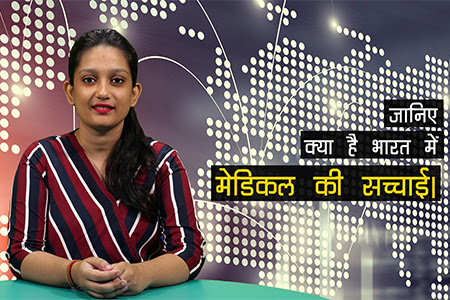
A Country with a population of 1.3 Billion
India is home to a population of 1,368,529,051 people (1.3 Billion) which accounts for over 17.71% of the total world population! A population of that strength requires a robust medical industry to ensure all-around development of the population, and not just one that focuses on the economics of the country.
Yet, are the citizens receiving the standard of care they deserve? Does our healthcare sector measure up against the rising demands of our growing population?
Statistics and Recommendation by the World Health Organization
According to the World Health Organization (WHO), there is a need for a minimum of 44.4 doctors per 10,000. But the statistics of the healthcare providers in India are way below the minimum threshold set by the WHO at 22.8 doctors per 10,000!
The numbers in India stand at a discouraging 20.6 per 10,000!
Regarding the ratio of government physicians, there is merely one doctor for every 11,528 residents, whereas for nurses, the figure stands at one per 483 individuals. In terms of annual additions, the country produces 30,000-35,000 new medical graduates each year, contrasted with an actual national requirement of one million medical graduates annually!
Current Scenario in India
Examining the various groups of healthcare professionals currently active in India, we identify 7 distinct categories, namely -
- Allopathic doctors - 770 thousand
- Dental practitioners - 95.9 thousand
- AYUSH practitioners (Ayurveda, Unani, Siddha, and Homeopathy) - 530.9 thousand
- Nurses, Auxiliary nurses, and midwives - 1.3 Million
- Pharmacists - 214.7 thousand
- Physiotherapists, diagnostics and other technicians - 86.5 thousand
- Health Associate Professional - 811.7 thousand
Consequently, while the country counts over 3.8 million doctors, there is a catch: the number of officially registered healthcare professionals in India exceeds 5 million. This indicates that out of all registered healthcare personnel, an estimated 76.21% are actively practicing.
Medical Education in India
Looking at the state of medical education in India reveals another troubling picture that prompts many questions. In 2019, over 1.4 million students appeared for the National Eligibility Cum Entrance Test (NEET) to secure a seat in a medical institution! Result? About 795 thousand cleared the exam from India.
However, this is where the major challenge arises!
Although 795 thousand candidates passed the examination, the vast majority fail to secure admission into an MBBS program that same year. Why? India offers only 70,978 MBBS seats. Of these 70,978 seats, 35,688 are situated in government-run colleges, while the rest belong to private universities and institutions. Consequently, fewer than 10% of those who pass the test gain admission in the same year! What happens to the remainder?
The Setbacks
Unfortunately, medical education in our nation confronts numerous obstacles, as the volume of aspirants vastly outweighs the genuine institutional capacity to complete their training. More than 90% of the students who clear NEET are left every year facing difficult choices. While many opt to make multiple attempts year after year to secure admission, numerous others are forced to abandon their aspirations of becoming a doctor.
Another alarming issue is the heavy financial burden nearly 50% of accepted MBBS students must bear because they secure seats in private medical colleges. This reduces domestic medical education to a restrictive environment governed by the reality that financial constraints prevent entry. The scarcity of awareness and guidance regarding alternative pathways exacerbates the situation, leaving students without proper direction.
MBBS from Abroad – A Golden Chance to Live Your Dream of Becoming A Doctor
We are referring to pursuing an MBBS degree abroad. Mentioning studying overseas often prompts concerns about exorbitant costs. However, did you know that earning an MBBS from several foreign nations is more affordable than attending most private colleges in India? Factoring in both tuition and living expenses abroad, your total expenditure can still remain lower than the fees charged by certain private Indian colleges. The sole barrier here is the lack of information! Let us examine this further through an example.
Consider Russia as an illustrative case.
Studying MBBS in Russia typically requires an investment of around USD 30,000, covering both tuition fees and living expenses. Based on the USD exchange rate, even factoring in a small margin for miscellaneous costs, the entire 6-year MBBS program can be completed within INR 22-23 lakhs. Comparing this to the tuition at private medical colleges in India, you may be surprised to find that Russia is over 30-40% cheaper!
We Can Help – Here’s How!
This represents a critical piece of information that a large portion of NEET candidates remains unaware of. Consequently, they forfeit vital years and sometimes even relinquish their dream of becoming a physician. Ashiraj MBBS is an organization dedicated to assisting these students by steering them toward the correct path. Through specialized counseling sessions and transparent partnerships, Ashiraj MBBS has proudly helped Indian students achieve their MBBS goals for over 25 years.
We are a nation with the world's second-largest population! Let us collaborate to become a nation with the world's finest medical industry as well. If you have qualified for your NEET this year and are searching for the best MBBS options, pick up the phone, and call !